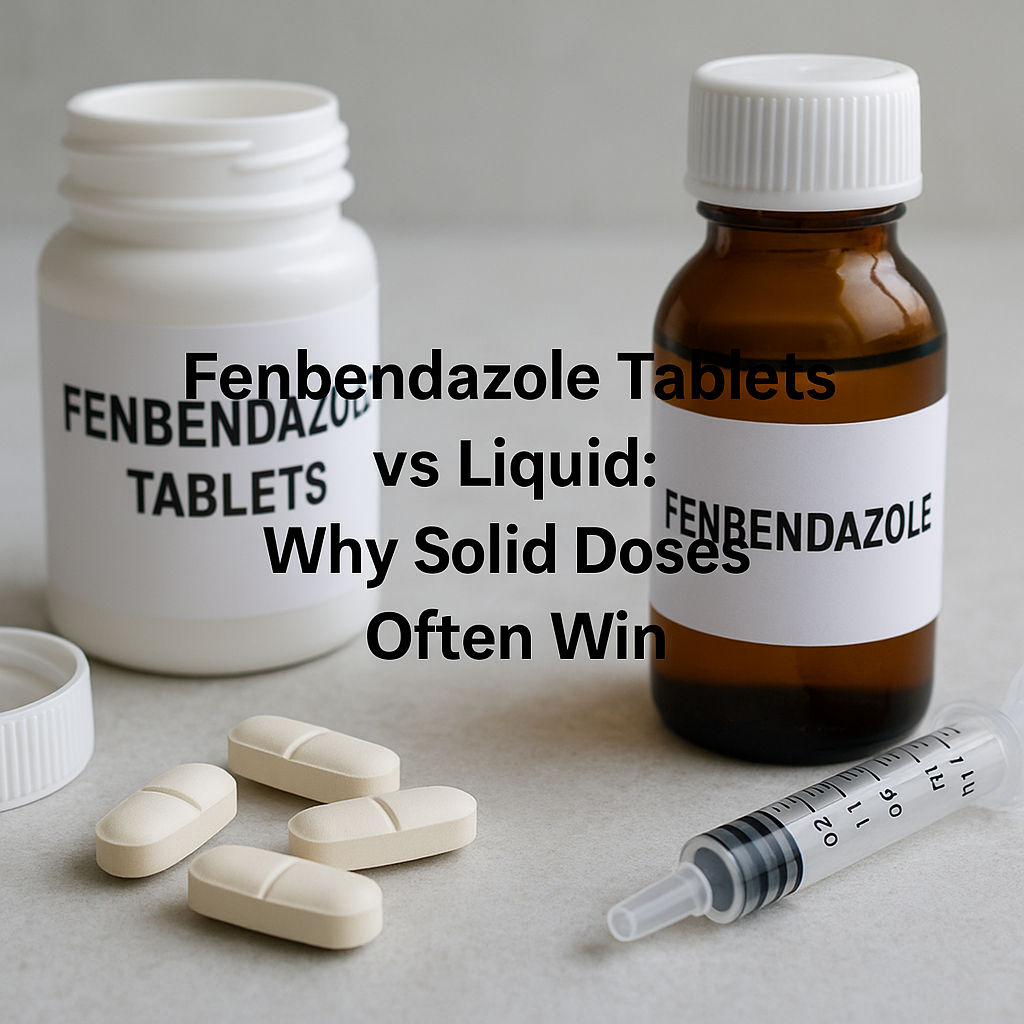
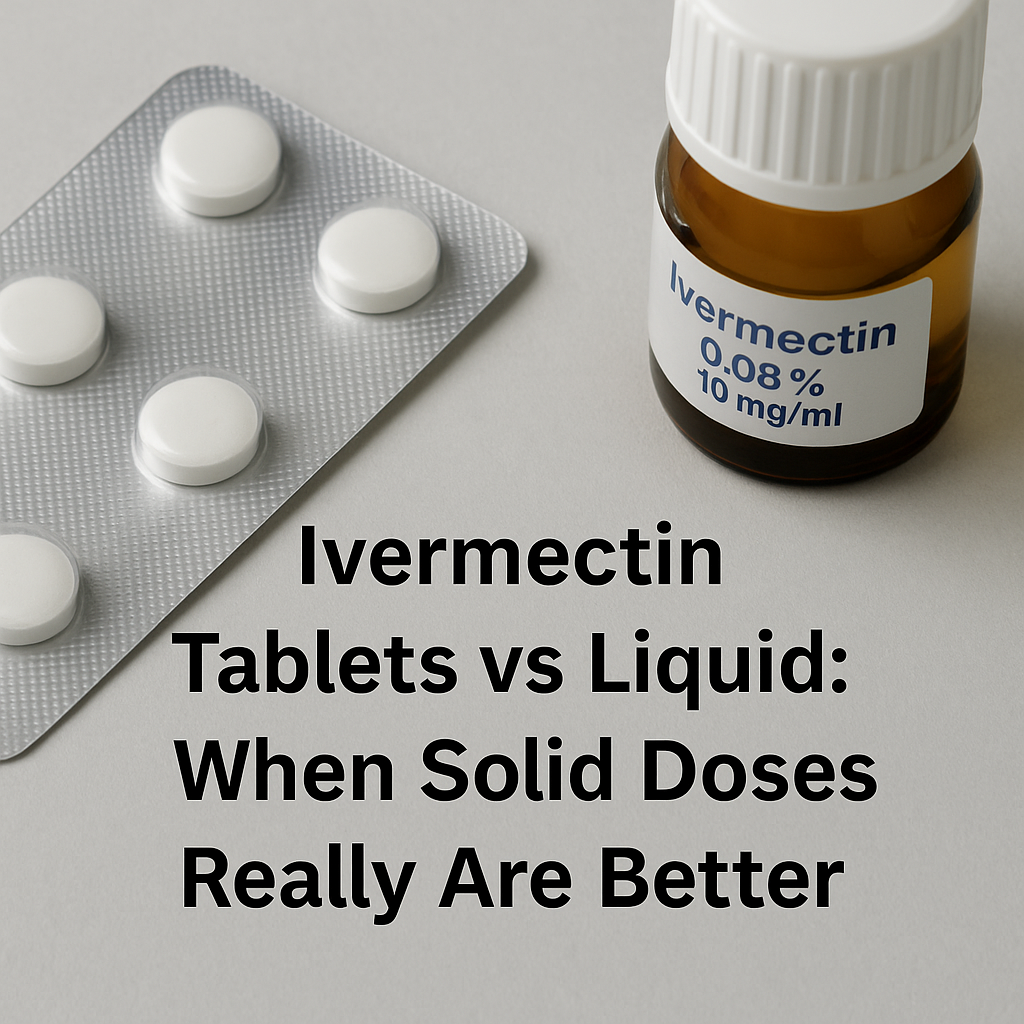
When you have a choice between ivermectin tablets and liquid, which form actually works better, and why do many clinicians lean toward tablets or capsules for most adults? Understanding the differences in dosing, safety, and convenience can help you and your prescriber choose the right option.
How ivermectin works (and why the form matters less than the dose)
Ivermectin is an antiparasitic medicine used in humans for conditions such as strongyloidiasis and onchocerciasis, and in some countries for other parasitic infections. The active ingredient is the same whether you swallow a tablet, a capsule, or a properly formulated oral liquid. In theory, if the dose, quality, and route are the same, the effect should be similar.
In practice, the dosage form you use affects:
- How accurately you receive the prescribed milligram dose
- How easy it is to take the medicine as directed
- The risk of dosing errors, especially in children or people measuring their own liquid
- Storage stability and shelf life
That’s why, in many routine situations, ivermectin tablets or capsules are preferred over liquids when they are available and appropriate.
Tablets and capsules: Where ivermectin shines for most adults
For adults and older children who can safely swallow solid medicine, ivermectin tablets (or capsules where available) have several practical advantages over liquid forms.
1. More precise dosing and fewer measurement errors
Ivermectin is usually dosed by body weight (for example, a certain number of micrograms per kilogram). With tablets or capsules, the prescriber can calculate the dose and tell you exactly how many units to take. You simply count and swallow.
By contrast, liquid ivermectin relies on volume measurements (milliliters or teaspoonfuls). That introduces more opportunities for mistakes:
- Using a kitchen teaspoon instead of an oral syringe or dosing cup
- Misreading the tiny lines on a syringe
- Confusing milliliters (mL) and teaspoons (tsp)
- Shaking the bottle inconsistently when a suspension is used
These small errors can add up, especially with repeated doses. Solid doses remove most of this guesswork.
2. Better portability and convenience
Ivermectin tablets or capsules are compact, do not leak, and are easy to carry in a pill organizer. If you need to take a dose at work, while traveling, or during a multi-day treatment, tablets are usually more convenient than a liquid bottle plus measuring device.
Liquid formulations can be bulkier and more fragile. They may also need to be stored upright, closed tightly, and sometimes protected from light to maintain quality. For people who value simplicity, tablets usually win.
3. Typically longer shelf life and greater stability
Solid dosage forms like tablets and capsules are generally more chemically stable than liquids. They are less prone to degradation from heat, light, or contamination once opened. This can translate into:
- Longer expiration dates
- More consistent potency over time when stored correctly
- Lower risk of microbial contamination compared with multi-dose liquids
While exact shelf life depends on the specific product, this stability is one reason manufacturers and health programs often favor tablet forms of ivermectin for large-scale use.
4. Less risk of taste issues affecting adherence
Many people find ivermectin tablets or capsules easier to tolerate because they are swallowed quickly, often with water or food. Liquids must stay in the mouth longer, and some have an unpleasant or bitter taste. A bad-tasting medicine can reduce adherence, especially in children or adults with sensitive palates.
Where ivermectin liquid has a role
Although ivermectin tablets or capsules are often better for adults, liquid formulations do have important roles, particularly in specific patient groups.
1. Patients who cannot swallow tablets or capsules
Some people simply cannot safely swallow solid medication, including:
- Very young children, depending on age and local prescribing guidelines
- Older adults with swallowing difficulties
- Patients with certain neurologic conditions, feeding tubes, or throat/esophageal disorders
In these cases, a properly formulated oral liquid may be the only practical way to deliver ivermectin safely and accurately, assuming an appropriate human product is available and prescribed.
2. Flexible dosing when tablet strengths are limited
In some regions, ivermectin tablets are manufactured in only a few fixed strengths. If a patient’s weight-based dose falls between available tablet sizes, clinicians may:
- Round the dose up or down within a clinically acceptable range, or
- Use a liquid formulation to fine‑tune the dose, when available and appropriate
With liquid ivermectin, the dose can be adjusted in smaller increments, which may be useful for patients at the extremes of body weight or with special clinical considerations. However, this flexibility only helps if measuring is accurate and the product is designed for that use.
3. Special formulations for specific clinical settings
Some hospitals or specialty pharmacies may prepare liquid ivermectin formulations for patients with complex needs, such as those receiving medication via feeding tube. These are carefully prepared and dosed by professionals. This is different from using non-human products or improvised mixtures, which can be unsafe.
Why ivermectin tablets are often considered “better than liquid”
When people say ivermectin capsules or tablets are better than liquid, they’re usually talking about everyday, real-world use for adults and older children who can swallow pills. In that context, tablets have several advantages.
1. Lower risk of dosing mistakes at home
Counting tablets is straightforward. Measuring milliliters in a syringe or spoon is not. For home use, especially when patients are anxious or unfamiliar with medical tools, tablets dramatically reduce the risk of taking too much or too little.
2. Easier to standardize in public health programs
In community or public health campaigns, ivermectin tablets are much easier to distribute, store, and administer than liquids. Health workers can quickly determine the correct number of tablets based on weight or height and hand them out. Liquid dosing would require more equipment, more training, and more time, all of which introduce room for error.
3. Better fit for long-term stock and emergency use
Because tablets are generally more stable, they are better suited to being stored in clinics, pharmacies, and emergency kits. Liquid formulations may have shorter shelf lives and more stringent storage requirements, making them less practical to keep on hand in large quantities.
Common misconceptions about ivermectin dosage forms
Discussions about ivermectin sometimes mix up important details. Clarifying a few frequent misconceptions helps put the tablets-versus-liquid question in perspective.
“Liquid ivermectin is stronger or faster-acting than tablets”
There is no general rule that liquid medicines are stronger or work faster than tablets. With ivermectin, what matters most is:
- The total milligram dose taken
- Whether the product is a legitimate human medicine in the correct formulation
- How closely you follow the prescriber’s instructions
When those factors are controlled, the clinical effect should be comparable between a tablet and a properly formulated oral liquid at the same dose.
“Any ivermectin liquid can be used instead of tablets”
This assumption can be dangerous. Many ivermectin liquids on the market are veterinary products intended for animals, often at different concentrations and with different inactive ingredients. Human use of non-human products carries serious risks, including incorrect dosing and exposure to unsuitable excipients. Only use ivermectin that has been prescribed for you and dispensed from a legitimate pharmacy.
“Tablets can always be crushed to mimic a liquid”
Some tablets may be safely crushed and mixed with a small amount of soft food or liquid, but not all. Crushing can affect taste, absorption, and stability, and it may not be appropriate for certain formulations. This should only be done if your prescriber or pharmacist specifically confirms it is safe for your ivermectin product and situation.
How to decide between ivermectin tablets and liquid
The choice between ivermectin tablets and liquid should always be made with a qualified health professional. That decision usually rests on a few core questions.
1. Can the patient swallow tablets or capsules safely?
If the answer is yes, ivermectin tablets or capsules are usually preferred for their precision, convenience, and stability. If not, a prescriber may consider a suitable liquid formulation, if available, or alternative strategies.
2. Is the product a human-approved formulation?
Only use ivermectin products approved for human use in your country or region. This applies to both tablets and liquids. Avoid improvised dosing such as using animal formulations, online unverified liquids, or home-made mixtures.
3. How complex is the dosing regimen?
For most standard, short courses of ivermectin, tablets are simple and reliable. If a patient requires an unusual dose, very small increments, or administration through a feeding tube, a specialist may opt for a liquid formulation prepared or selected for that purpose.
Practical tips for safe ivermectin use in any form
Regardless of whether you use ivermectin tablets or liquid, a few habits can improve safety and effectiveness.
- Follow the exact dose and schedule given by your prescriber; do not copy someone else’s dose.
- Ask how to take it (with food or on an empty stomach) and follow that guidance for best absorption.
- Store ivermectin properly—usually at room temperature, away from excess heat and moisture, and out of reach of children.
- Use proper measuring devices if you are prescribed a liquid; never estimate with household spoons.
- Report side effects such as dizziness, rash, or vision changes to your healthcare provider promptly.
Bottom line: When are ivermectin tablets truly “better than liquid”?
For most adults and older children who can swallow pills, ivermectin tablets or capsules are usually a better choice than liquid because they offer more accurate dosing, simpler use, better stability, and easier storage and transport. Liquid ivermectin has an important role when swallowing tablets is not possible or when very fine dose adjustments are required under medical supervision.
The key is not to choose the form on your own, but to work with a healthcare professional who can match the dosage form—tablet, capsule, or liquid—to your specific medical condition, body weight, and practical needs. Used correctly and in the right form, ivermectin can be an important tool in treating certain parasitic infections.
Learn more about ivermectin dosage forms
If you are interested in understanding other aspects of ivermectin—such as typical indications, safety considerations, and how different strengths compare—exploring focused resources on the topic can help you prepare better questions for your prescriber. For more articles and guides, you can browse the ivermectin information hub at our ivermectin category page.
Thanks for reading our blog.