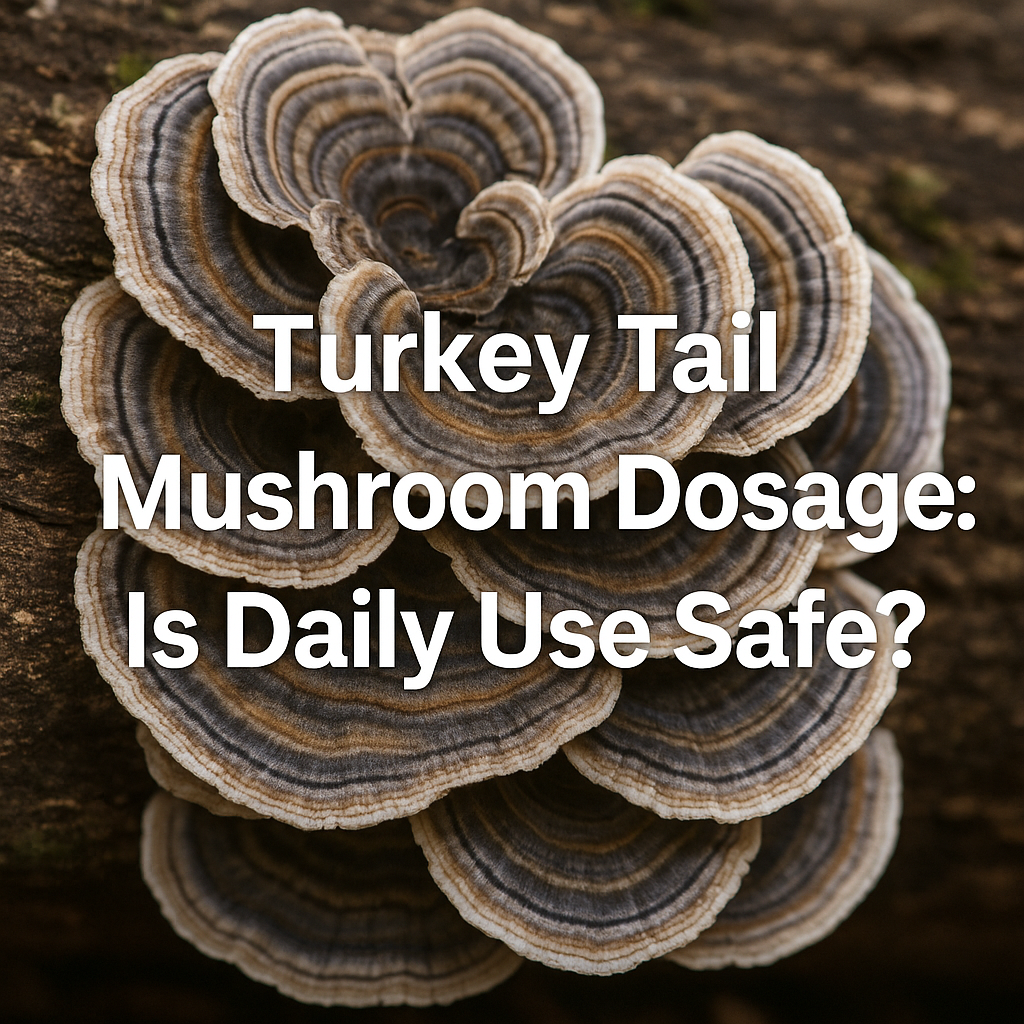
Turkey tail mushroom has moved from niche herbal shops into mainstream wellness routines, with many people adding it to their daily stack for gut and immune support. Alongside that trend comes a key question: how much turkey tail is typically used, and is it safe to take every day?
What Is Turkey Tail and How Is It Commonly Used?
Turkey tail (Trametes versicolor) is a medicinal mushroom long used in traditional herbal practices. Today it’s usually consumed as:
- Capsules or tablets – often standardized extracts (e.g., polysaccharide or beta-glucan content).
- Powders – whole mushroom or extract powders added to drinks or food.
- Liquid extracts/tinctures – alcohol, water, or dual-extract preparations.
- Teas or decoctions – simmered dried mushroom pieces.
Most people interested in turkey tail are looking for general wellness, gut and microbiome support, or immune system support. For those uses, a consistent, moderate intake over time is more typical than occasional large doses.
Typical Turkey Tail Dosage Ranges
There is no single universally agreed “correct” turkey tail dosage, and products vary widely in strength. However, some general informational ranges show up across supplements and herbal references:
- Turkey tail extract capsules: Many commercial products fall in the range of about 500–1,000 mg (0.5–1 g) per serving, once or twice daily. Some higher-potency extracts may recommend smaller serving sizes.
- Whole mushroom or powdered products: Informational ranges often fall around 1–3 g per day, sometimes divided into 2–3 servings.
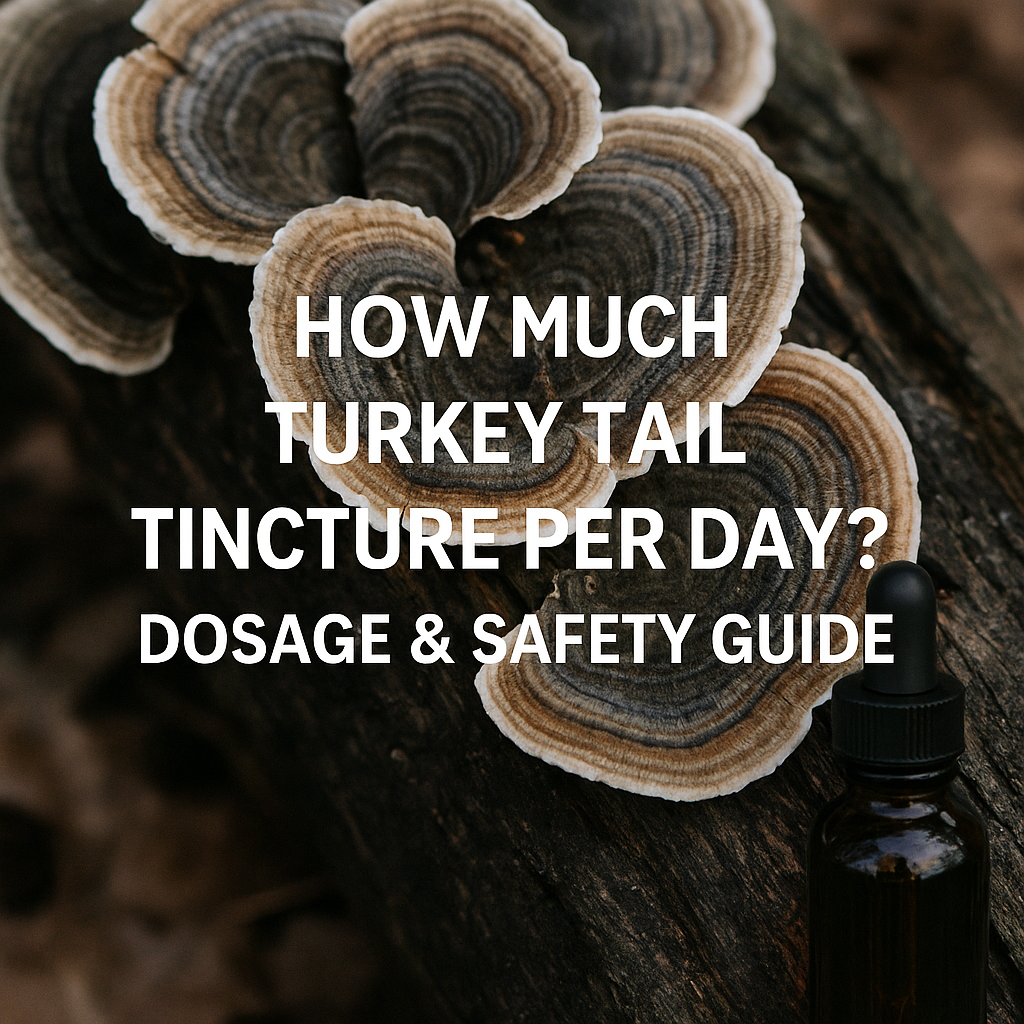
- Liquid extracts/tinctures: Serving sizes are usually expressed in milliliters or droppers (for example, 1–3 mL once or twice daily), depending on concentration.
Because there is no universal standardization, it’s important to read your specific product label carefully and understand whether it contains a whole-mushroom powder, a concentrated extract, or a blend.
Is Turkey Tail Safe to Take Daily?
Available research and traditional use suggest that turkey tail is generally well-tolerated for many people when used in typical supplemental amounts. In some clinical settings, turkey tail-derived compounds have been used for extended periods under medical supervision.
For general wellness, many people choose a moderate daily dose rather than intermittent large doses. A common pattern is using the product daily for several weeks or months, then reassessing how they feel and whether it still makes sense to continue.
That said, what’s appropriate can vary based on factors like individual health status, concurrent medications, and the specific product used. For anyone with a medical condition or those taking medications, daily use should be discussed with a qualified healthcare professional who knows your history.
Factors That Influence a Reasonable Daily Amount
When thinking about a daily turkey tail routine, it’s useful to consider:
- Form and concentration: A 500 mg capsule of a highly concentrated extract is not the same as 500 mg of dried whole mushroom. Check whether your product specifies an extract ratio (e.g., 10:1) or standardized polysaccharide/beta-glucan content.
- Body weight and sensitivity: People who are smaller, have a history of digestive sensitivity, or tend to react strongly to supplements may prefer starting at the lower end of the product’s suggested range.
- Purpose of use: Someone using turkey tail for general wellness might choose a lower, steady amount than someone under professional guidance for more intensive support.
- Duration: Some individuals use turkey tail consistently for months; others prefer cycles (for example, several weeks on, followed by a break). There is no one pattern that fits everyone.
How to Introduce Turkey Tail Safely
Because each person’s response can differ, a cautious, stepwise approach makes sense:
- Start low: Begin at the lower end of your product’s suggested serving range rather than the maximum.
- Increase gradually: If you tolerate it well for a week or two, you and your healthcare provider may decide whether it makes sense to move toward the middle of the suggested range.
- Monitor how you feel: Pay attention to digestion, energy, sleep, and any new or unusual symptoms.
- Consider breaks: Some people like to take periodic breaks (for example, a few days off after several weeks of use) to reassess.
This kind of gentle ramp-up and regular check-in is especially important if you take other medications or have underlying health issues.
Potential Side Effects and When to Be Cautious
Turkey tail is generally considered low in toxicity in typical supplemental amounts, but side effects can occur. Reported issues tend to be mild and may include:
- Digestive discomfort (gas, bloating, loose stools)
- Nausea or changes in appetite
- Headache or general malaise in sensitive individuals
If side effects appear after starting turkey tail, reducing the amount, pausing use, or discussing with a healthcare professional can help clarify whether the mushroom is the cause.
Extra caution is generally advised for people who:
- Have allergies to mushrooms or molds – Avoid turkey tail if you have known mushroom allergies unless cleared by an allergist.
- Are pregnant, planning pregnancy, or breastfeeding – Safety data are limited, so professional guidance is essential.
- Have autoimmune conditions – Because turkey tail may influence immune activity, it’s important to discuss with a specialist.
- Take immune-modulating drugs, chemotherapy, or anticoagulant medications – Interactions are possible, so coordination with your medical team is critical.
Daily Turkey Tail and Other Supplements
Turkey tail is often taken alongside other functional mushrooms or supplements. When layering products, consider the total daily load on your system:
- Avoid jumping into high doses of multiple new supplements at once.
- Introduce one product at a time so you can tell what is helping or causing side effects.
- Keep a simple log of amounts and timing if you’re experimenting with combinations.
If you’re building a broader mushroom routine (for example, combining turkey tail with other species), it can be helpful to work with a practitioner experienced in botanical and mushroom-based supplements.
Quality Matters: Choosing a Daily Turkey Tail Product
If you plan to use turkey tail daily, the quality of the product becomes especially important. Consider looking for:
- Clear labeling – Species name (Trametes versicolor), plant part used (fruiting body, mycelium, or both), and whether it’s whole mushroom or extract.
- Testing information – Third-party testing for contaminants like heavy metals, pesticides, and microbes.
- Transparency on extraction – How the product is processed (e.g., hot water extract, dual extract) and any standardized active compounds.
Because turkey tail is often taken for extended periods, investing in a reputable brand can be particularly important for long-term safety and consistency.
How Long Can You Take Turkey Tail?
There is no single established limit for how long turkey tail can be taken, and research in this area is still evolving. In practice, some people use it for shorter phases (such as during certain seasons), while others use it longer term under professional guidance.
A reasonable approach is to:
- Reevaluate your need for turkey tail every few weeks or months.
- Check in with a healthcare professional if you plan to use it daily for an extended time, especially if you have health conditions.
- Be willing to adjust your dosage, take breaks, or discontinue if your situation or health status changes.
When to Talk to a Professional Before Daily Use
It’s especially important to seek individualized advice before using turkey tail daily if you:
- Have a chronic medical condition (for example, autoimmune, liver, kidney, or blood disorders).
- Are taking prescription medications, including immune therapies, blood thinners, or other drugs with narrow safety margins.
- Are immunocompromised or undergoing cancer treatment.
- Are pregnant, trying to conceive, or breastfeeding.
A practitioner who understands both your medical history and herbal or mushroom-based supplements can help you weigh potential benefits and risks, consider interactions, and decide whether daily turkey tail is appropriate for you.
Key Takeaways on Daily Turkey Tail Dosage and Safety
- Turkey tail is widely used as a daily supplement, often in the range of about 0.5–3 g per day depending on form and concentration, but there is no single universally agreed dose.
- For many people, a low-to-moderate daily amount, introduced gradually, is a cautious way to explore how they respond.
- Most reported side effects are digestive and mild, but more serious issues are possible, especially for those with underlying health conditions or on specific medications.
- Daily use is more likely to be safe when you choose a high-quality product, pay attention to how you feel, and involve a qualified healthcare professional in your decision-making.
This article is for general information only and is not a substitute for personalized medical advice, diagnosis, or treatment. Always consult a qualified healthcare professional before starting, stopping, or changing any supplement, including turkey tail.
Thanks for reading our blog.