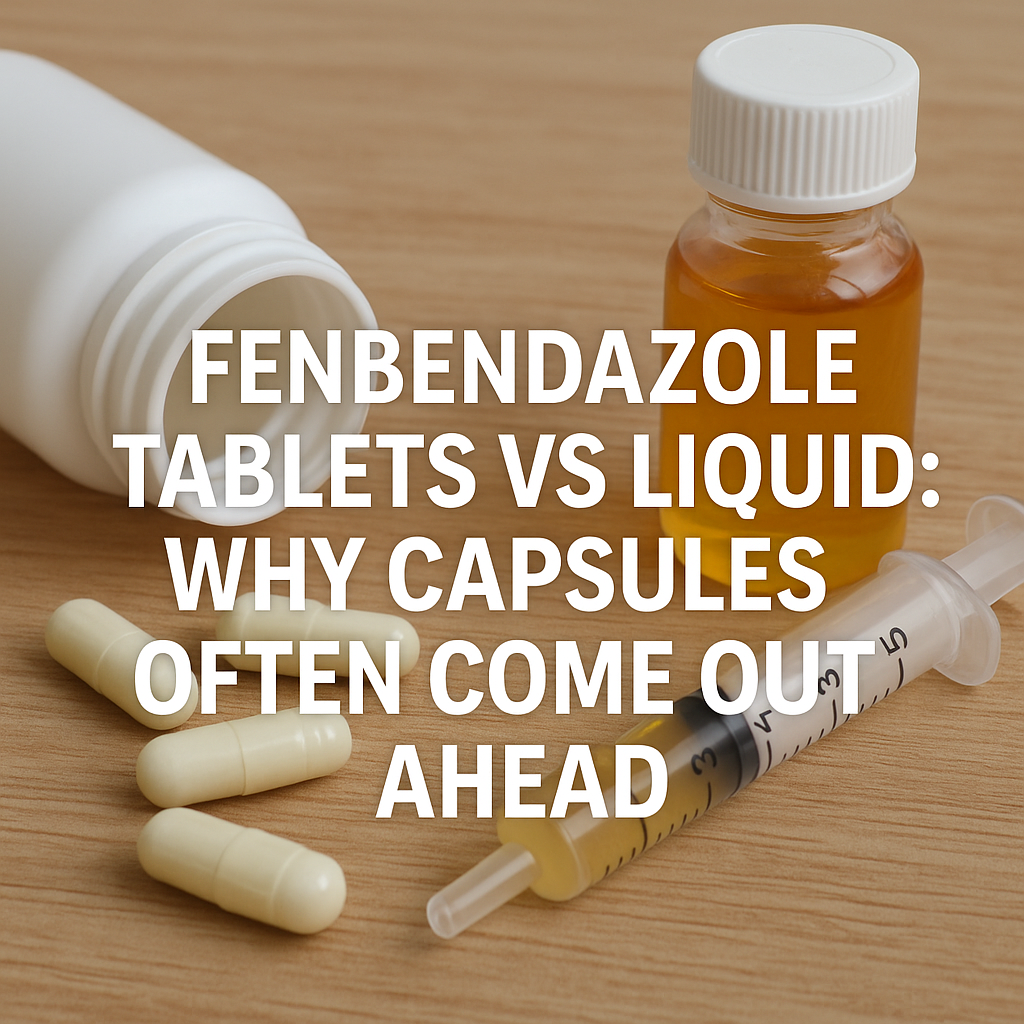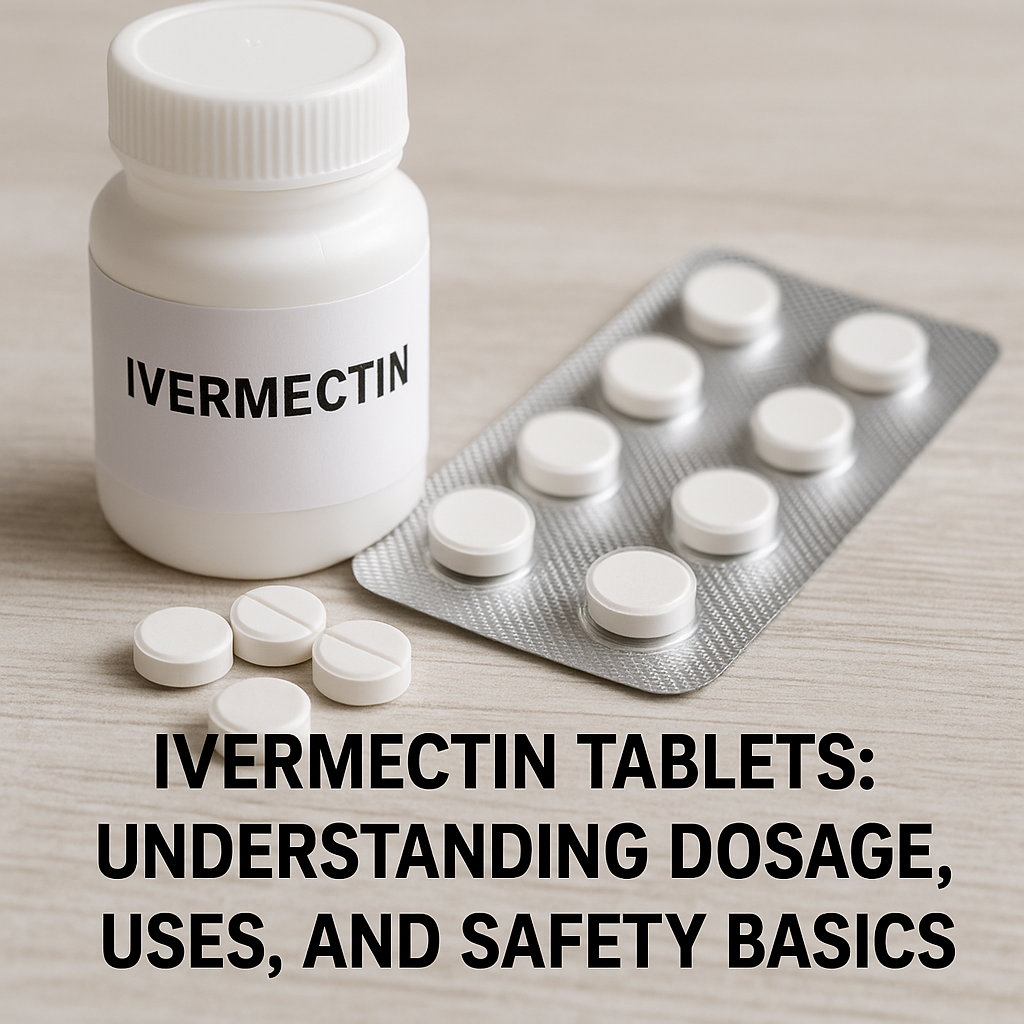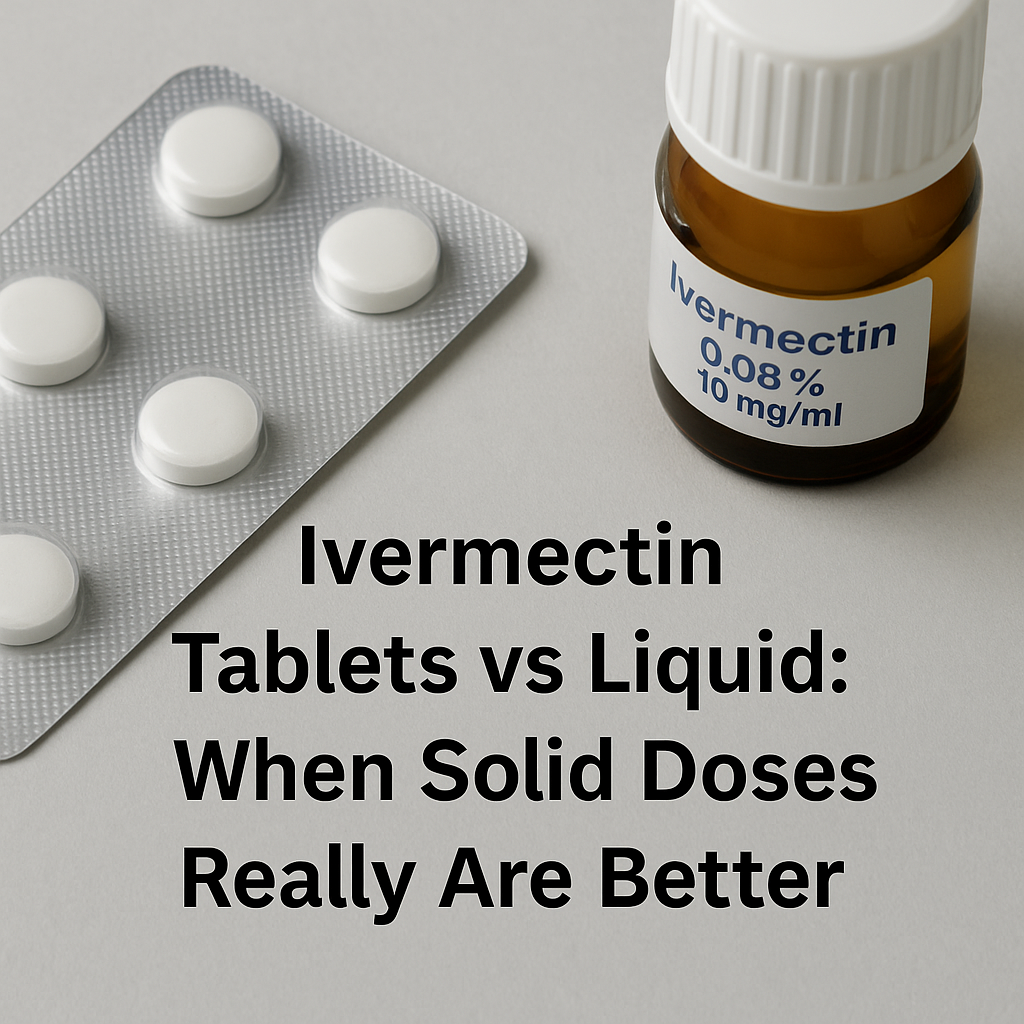
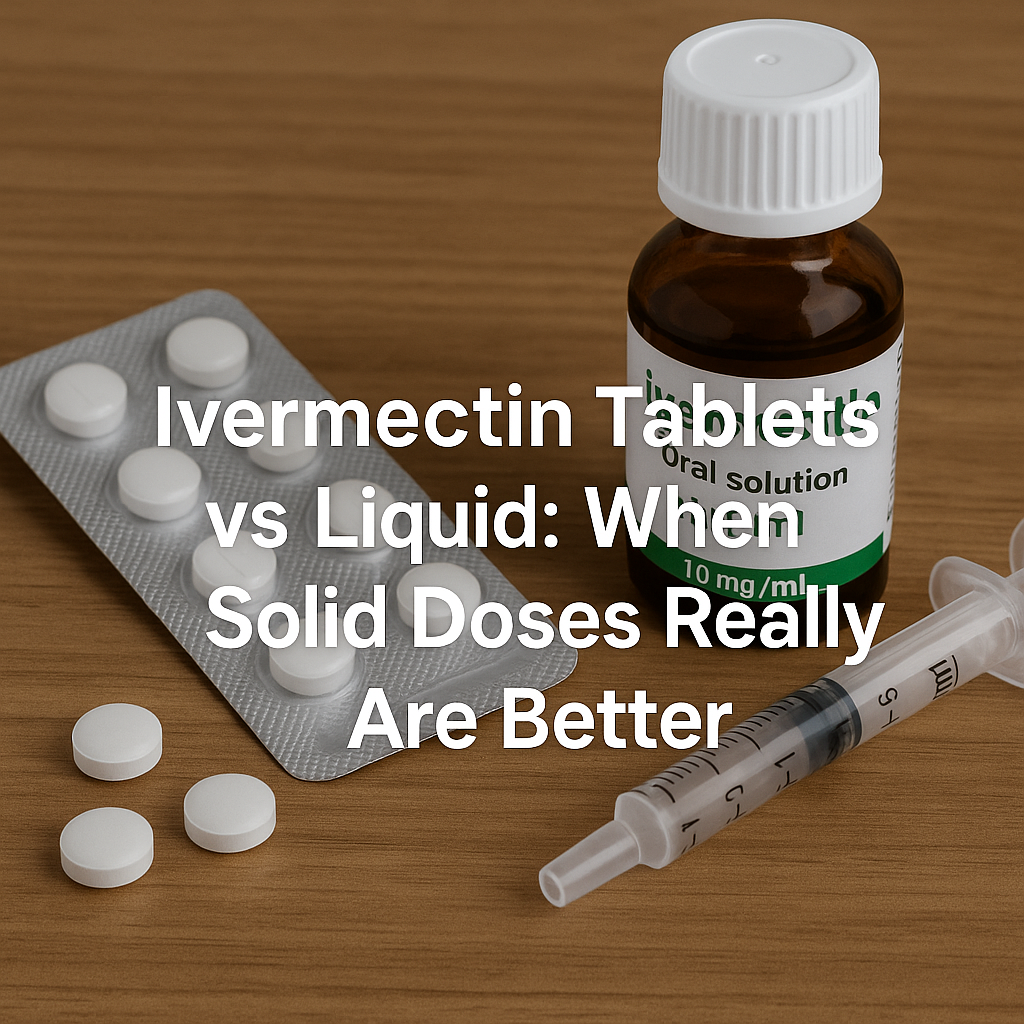
When you have a choice between ivermectin tablets and liquid, which one is actually better, and why do many clinicians and patients prefer tablets? Understanding how the two forms differ in dosing, stability, and real-world use can help you choose the safer, more practical option for your situation.
How ivermectin tablets and liquid differ at a glance
Both ivermectin tablets and liquid typically contain the same active ingredient, but they behave very differently in real-world use. The key contrasts are:
- Dosing accuracy: Tablets offer fixed, clearly labeled strengths; liquids often require measuring small volumes with syringes or droppers.
- Stability and shelf life: Solid tablets are generally more stable and less prone to contamination than multi-dose liquid bottles.
- Ease of use: Swallowing a tablet is simple for most adults, while measuring and administering liquid can be fiddly and error-prone.
- Misuse risk: Liquid ivermectin is often sold in veterinary formulations, which are not designed or approved for human use.
Because of these differences, ivermectin tablets are usually the more reliable and appropriate form for human treatment when ivermectin is indicated and prescribed by a qualified clinician.
Why ivermectin tablets are usually preferred for humans
The strongest argument for ivermectin tablets over liquid is consistency. Human ivermectin tablets are manufactured in standardized strengths (for example, 3 mg or 6 mg). This makes it much easier for prescribers to calculate a precise weight-based dose and for patients to follow that prescription exactly.
With tablets, dose adjustments are typically made by changing the number of tablets taken, not by asking the patient to measure out fractions of a milliliter. This reduces the risk of underdosing (which may reduce effectiveness) or overdosing (which increases the chance of side effects).
In contrast, liquid ivermectin often comes in veterinary concentrations intended for animals of very different body weights and metabolic profiles. Even when converted carefully, the margin for error is much higher, especially if the person doing the measuring is not medically trained.
Comparing dosing accuracy: solid vs liquid
Tablets:
- Supplied in fixed strengths with clear labeling.
- Dose is counted (e.g., 1–3 tablets), which is straightforward to communicate and verify.
- Less dependent on patient technique; swallowing is the only step.
Liquid:
- Requires accurate measurement using an oral syringe or dropper.
- Concentration can vary by product, especially between human and veterinary versions.
- Measurement error (e.g., reading the syringe at an angle, using the wrong device, or confusing units) is common in practice.
For most adults and older children who can swallow pills, this is why ivermectin tablets are generally considered the safer, more reliable route of administration.
Stability, storage, and contamination risk
Another advantage of ivermectin tablets is their inherent stability. Solid dosage forms are generally less sensitive to everyday storage mistakes than liquids. They are less likely to be affected by brief temperature fluctuations, and they are not repeatedly exposed to air or potential contaminants in the way a multi-dose bottle of liquid is.
Liquid formulations can degrade faster, especially if not stored exactly as directed. Every time the bottle is opened and a syringe or dropper is inserted, there is a small risk of contamination. Over time, this can change the concentration or safety of the product. For a medication that should be dosed accurately and used intermittently, these risks make tablets more practical for most patients.
Usability in everyday life
From a usability standpoint, ivermectin tablets are typically simpler for patients and caregivers:
- Portability: Tablets in a blister pack or bottle travel easily without risk of spills.
- No measuring tools required: There is no need to keep track of an oral syringe or dosing spoon.
- Clearer instructions: Directions like “Take 2 tablets once” are easier to follow than “Take X milliliters of solution,” especially in stressful situations.
Liquid ivermectin, by comparison, can be messy to transport, requires correct measuring equipment, and depends heavily on patient or caregiver technique. These practical issues may seem minor on paper, but they often matter a great deal in real use.
When might liquid ivermectin be considered?
There are narrow situations where a liquid form of ivermectin could be considered under medical supervision, such as:
- Patients who cannot swallow tablets at all, even if crushed.
- Very young children, where a clinician has access to an appropriate pediatric formulation and can calculate the dose precisely.
- Certain hospital or research settings where dosing is tightly controlled and prepared by pharmacy staff.
Even in these cases, the formulation, concentration, and dosing should be selected by a qualified healthcare professional, not improvised from products that are not approved for human use.
Risks specific to liquid and veterinary ivermectin
A major concern with liquid ivermectin is that many widely available products are veterinary-only. These are designed for animals and are not regulated or labeled for human dosing. Using them in people introduces several risks:
- Incorrect concentration: The amount of ivermectin per milliliter may be far higher (or lower) than human tablets, leading to large errors in dose conversion.
- Non-human excipients: Inactive ingredients safe for animals may not be appropriate for humans.
- Misinterpretation of labels: Dosing instructions written for livestock can be easily misread or misapplied to humans.
By contrast, human ivermectin tablets go through regulatory review for safety, quality, and labeling in people. This is one of the most important reasons that, when ivermectin is indicated, the tablet form is preferred over improvised use of liquid, especially products intended for animals.
Cost, availability, and generic options
In many regions, ivermectin tablets are available as generics, which can make them relatively affordable when prescribed appropriately. Pharmacies may stock several strengths, and dosing regimens are well established for approved indications such as certain parasitic infections.
Liquid ivermectin for humans is less commonly stocked in community pharmacies, and what is widely available online is often veterinary-grade. While those products may appear cheaper or easier to obtain without a prescription, they come with significant safety and dosing concerns. Considering the potential for harm, any perceived cost savings are rarely worth the risk.
Which is better for you: tablets or liquid?
For most adults and older children who can swallow pills and who are being treated for a condition where ivermectin is clearly indicated, ivermectin tablets are usually the better choice. They offer:
- More precise, standardized dosing.
- Better stability and lower contamination risk.
- Simpler instructions and easier adherence.
- Reduced risk of confusion with veterinary products.
Liquid ivermectin, especially veterinary formulations, should not be used in place of properly prescribed human tablets. If you cannot swallow tablets or have questions about dosing, the right next step is to speak with a healthcare professional who can select an appropriate formulation and dose for your specific situation.
How to discuss ivermectin form and dosing with your clinician
If you have been prescribed ivermectin or are being evaluated for a condition where it might be used, ask your clinician:
- Why a tablet or another form is recommended in your case.
- Exactly how many milligrams you should take and how often.
- What to do if you miss a dose or have trouble swallowing tablets.
- Whether there are any specific storage or handling instructions.
Clarifying these points upfront can help you avoid common pitfalls, especially if you have seen mixed information online about ivermectin tablets versus liquid products.
Key takeaway: why ivermectin tablets are generally better than liquid
When comparing ivermectin tablets to liquid, the advantages of tablets are clear in most human-use scenarios: more reliable dosing, better stability, fewer opportunities for measurement error, and a much lower risk of accidentally using a veterinary-only product. While there are rare medical situations where a liquid formulation might be appropriate under professional supervision, self-directed use of liquid ivermectin is risky and should be avoided.
If ivermectin is being considered for you, the safest path is to use a human-approved tablet formulation exactly as prescribed, and to avoid substituting any unregulated or veterinary liquid products.
Thanks for reading our blog.