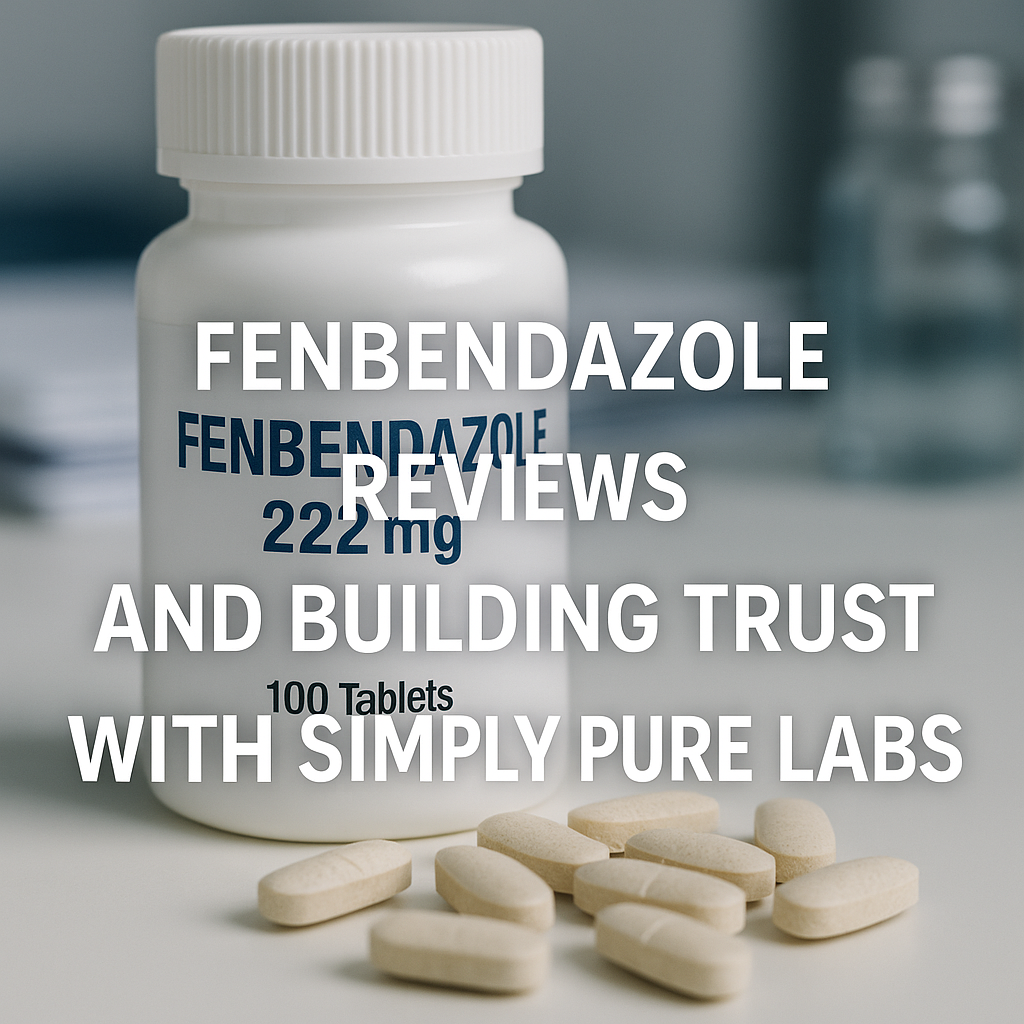
When you’re trying to dose fenbendazole accurately, the form you choose matters as much as the medication itself. Many pet owners and livestock keepers discover that tablets or capsules solve problems they constantly fight with in liquid form: inconsistent dosing, storage hassles, and animals spitting out medicine. Understanding how fenbendazole tablets compare to liquid can help you pick the form that actually works in real life, not just on the label.
Fenbendazole Basics: Same Active Ingredient, Different Delivery
Fenbendazole is a broad-spectrum anthelmintic used primarily in animals to treat and control internal parasites such as roundworms, hookworms, whipworms, and certain tapeworms. Whether it’s in tablet, capsule, paste, granule, or liquid form, the active ingredient is the same—what changes is how precisely and reliably you can get the correct dose into the animal.
Because the drug’s effectiveness depends on giving the right amount for the right number of days, the most practical question becomes: which form lets you dose accurately, consistently, and with the least stress?
Accuracy and Consistency: Where Fenbendazole Tablets Usually Beat Liquid
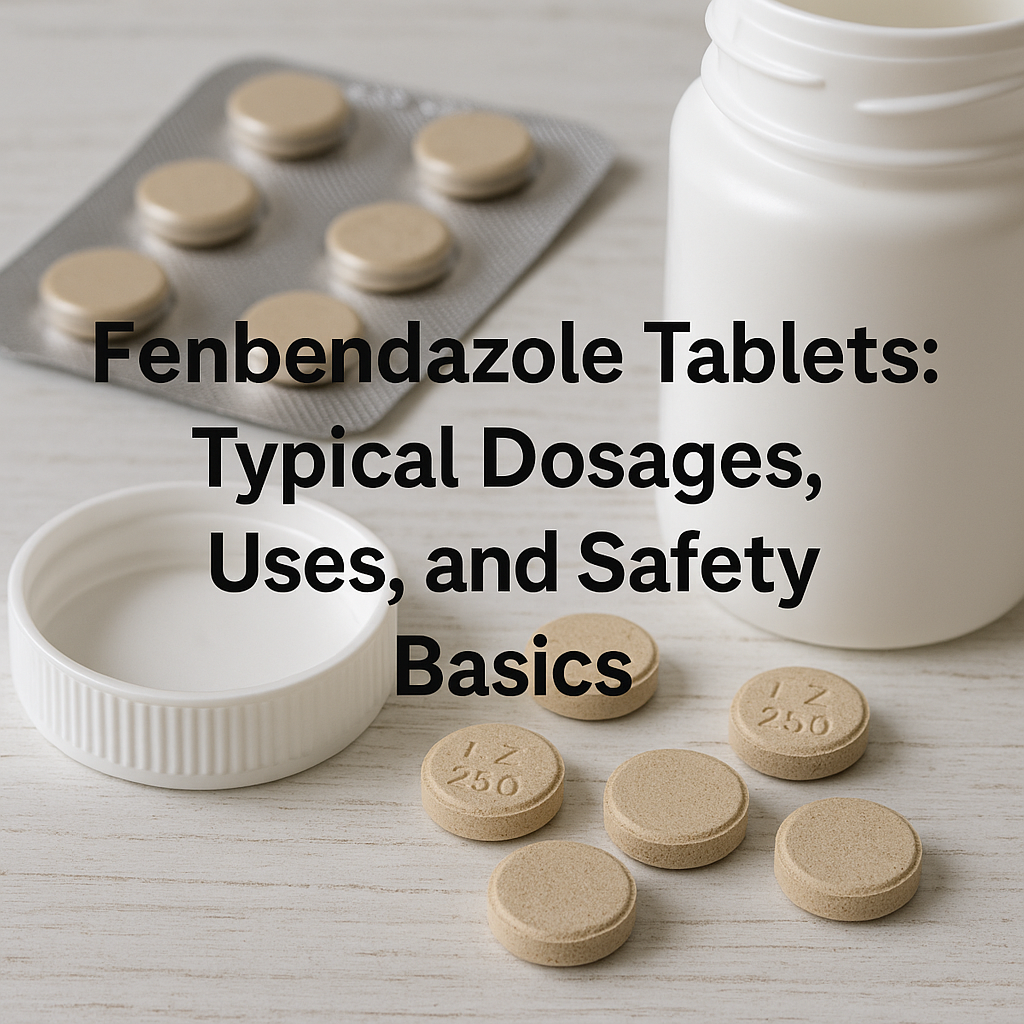
For many users, the main advantage of fenbendazole tablets or capsules over liquid is dose accuracy. With tablets, each unit is manufactured to contain a specific amount of fenbendazole—commonly 222 mg, 500 mg, or similar strengths—making calculations straightforward.
Measuring the Dose
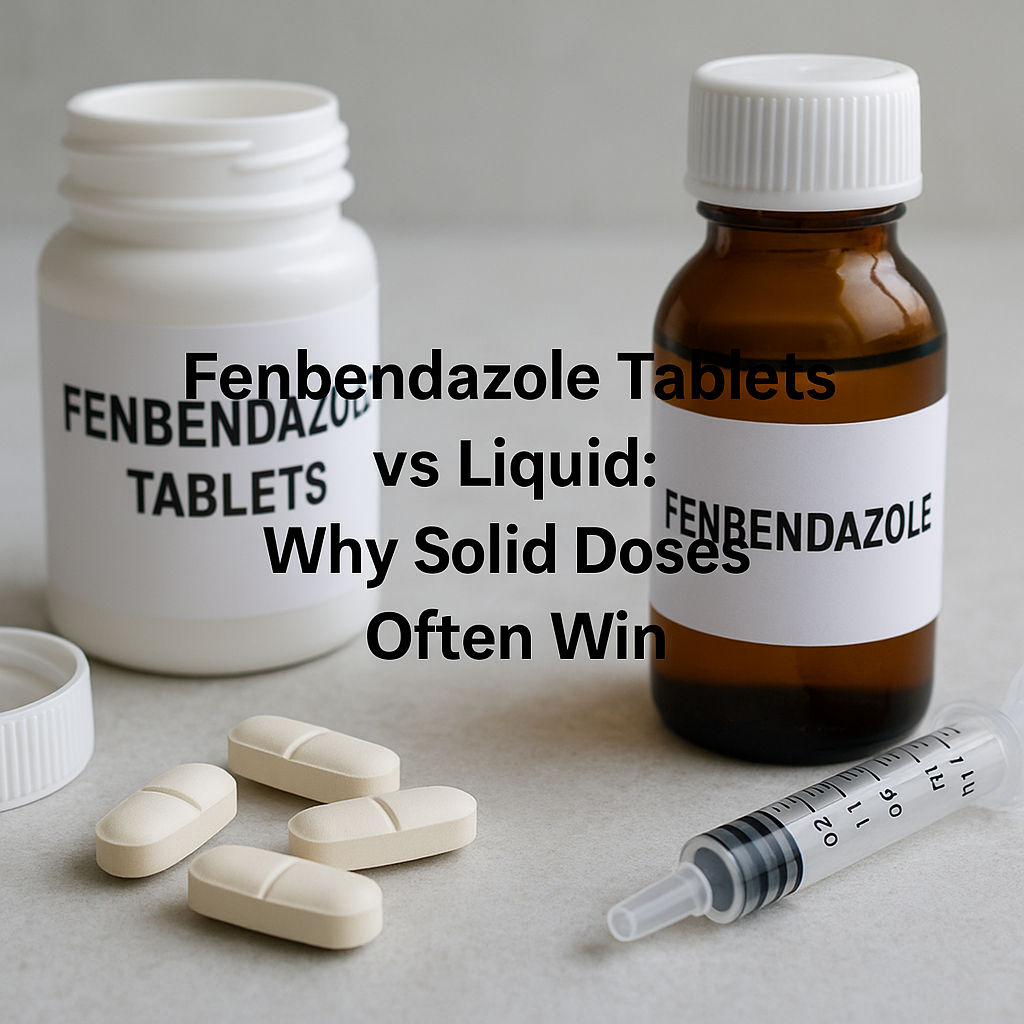
- Tablets/Capsules: Labeled by milligrams of fenbendazole per tablet or capsule. Dosing is typically done by body weight (e.g., mg per kg). You can split tablets or combine them to match the required dose, and capsules often can be opened and contents divided if needed.
- Liquid: Labeled by concentration (e.g., mg per mL). You must measure volume with a syringe or dropper, and slight errors in reading the markings can change the dose, especially in small animals.
In practice, it’s easier to be off by 10–20% when drawing up liquid than when using standardized solid doses. For small pets or precise protocols, that variation can be significant.
Consistency Over Multi-Day Courses
Fenbendazole is often given for several consecutive days. Tablets make it simpler to repeat the same dose accurately each day—no worrying about shaking the bottle the same way, drawing up identical volumes, or dealing with sediment.
- Tablets: Same milligram dose every day as long as you use the same number and strength of tablets.
- Liquid: Risk of under- or over-dosing if the suspension isn’t shaken consistently or if the measuring device changes (different syringes, droppers, or spoons).
Stability and Storage: Solid Forms Are Generally More Forgiving
Another practical advantage of fenbendazole tablets and capsules is stability. Solid forms usually tolerate normal storage conditions better than liquids, which may be more sensitive to temperature swings and contamination.
Shelf Life and Degradation
- Tablets/Capsules: Typically have longer shelf lives and are less prone to degradation if kept dry, sealed, and away from heat and light. They are less likely to separate or settle.
- Liquid: Suspensions can settle, crystallize, or separate over time. Some may require refrigeration or have shorter “use by” periods once opened. Inconsistent shaking can mean each dose contains a slightly different amount of active ingredient.
If you don’t use fenbendazole frequently, having a bottle of liquid sitting around for months can raise questions about potency, whereas blister-packed tablets or sealed capsules are usually easier to trust up to their expiration date.
Ease of Administration: What Works Best for Your Animal?
How easy it is to actually get fenbendazole into the animal can make or break a treatment plan. Both forms have pros and cons, but many owners find tablets or capsules more predictable in daily use.
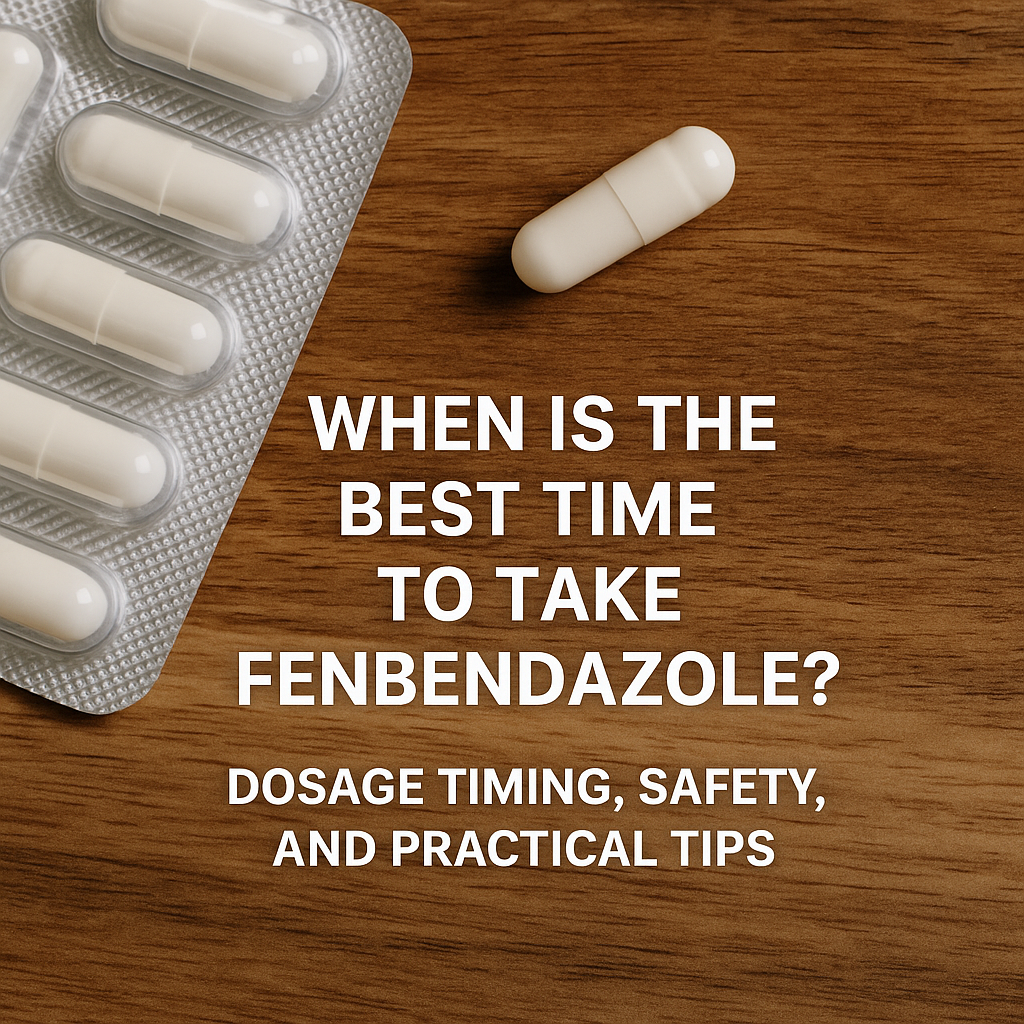
Giving Fenbendazole Tablets or Capsules
- Direct dosing: Tablets or capsules can be given by hand or with a pill popper. Once swallowed, you know the dose is in.
- Hidden in food: Many animals will accept tablets hidden in a small treat or food ball. Some tablets are scored for easier splitting.
- Crushed or opened: Tablets can often be crushed (if not extended-release or specially coated) and mixed with a small amount of food. Capsules may be opened and the powder mixed similarly, if appropriate for the product.
Giving Fenbendazole Liquid
- Oral syringing: Liquid is usually given by syringe into the side of the mouth. Animals may spit or drool some of it out, making it hard to know how much they actually swallowed.
- Mixing with food: Some animals detect the taste and refuse the food, especially after the first dose. Liquid can also spread through a larger portion of food, making it harder to ensure the full dose is eaten.
For animals that are easy to pill, fenbendazole tablets or capsules are often more reliable because you’re less likely to lose part of the dose to spitting, drooling, or food refusal.
Flexibility in Dosing: When Liquid Has an Edge—and When Tablets Still Work
Liquid fenbendazole does offer one clear advantage: fine-grained dose adjustment, especially in very small animals or unusual dosing protocols. But even here, tablets and capsules can remain competitive if used thoughtfully.
Situations Where Liquid Can Be Helpful
- Very small animals: Tiny dogs, cats, or exotic pets may need doses so small that tablets are difficult to split accurately.
- Custom or off-label regimens: When a vet prescribes a non-standard dose, being able to measure exact volumes can help match the protocol precisely.
How Tablets and Capsules Can Still Cover Most Needs
- Multiple strengths available: Using lower-strength tablets or capsules allows finer dose adjustments while staying in solid form.
- Dividing tablets: Scored tablets can be split into halves or quarters with a pill cutter for more precise dosing.
- Compounded capsules: In some cases, a pharmacy or veterinary compounding service can prepare custom-strength capsules, combining the precision of liquid with the stability and convenience of solids.
Unless you’re dealing with very small or sensitive dosing ranges, fenbendazole tablets or capsules usually provide enough flexibility without the drawbacks of liquid.
Portability and Convenience: Solid Doses Travel Better
If you need to give fenbendazole away from home, tablets and capsules are clearly easier to manage than a bottle of liquid and a measuring syringe.
- Tablets/Capsules: Easy to carry in a pill organizer or blister pack; no risk of leaks or broken glass; no measuring tools required at the time of dosing.
- Liquid: Bulkier, prone to leaking, and requires a clean syringe or dropper for each dose. More awkward to use on the road, at shows, or in barns.
For working animals, show animals, or situations where treatment must continue during travel, solid fenbendazole formulations are generally more practical.
Cost and Waste: Getting Full Value From Each Dose
Cost can vary widely by brand and formulation, so there’s no universal rule that tablets are always cheaper than liquid. However, there are cost-related considerations where tablets or capsules often come out ahead.
- Less waste: With tablets, you typically use exactly the number you need. With liquid, some medication may be lost in syringes, left in the bottle, or discarded if it expires before you finish it.
- Multi-animal dosing: For households or farms treating multiple animals of similar size, tablets and capsules can be portioned efficiently without worrying about running out of liquid mid-course.
- Storage losses: If a bottle of liquid has a shorter shelf life once opened, you may discard more unused product compared with long-lasting tablet packs.
Over time, better dosing accuracy and reduced waste can make fenbendazole tablets or capsules more economical, even if the price per unit looks similar on the shelf.
Safety and Handling: Reducing Exposure and Dosing Errors
Both tablets and liquid fenbendazole should be handled carefully according to product instructions, but the form affects practical safety concerns.
- Spill risk: Liquids can spill or splash, increasing the chance of skin or eye contact and accidental exposure. Tablets and capsules are less messy to handle.
- Label clarity: Tablet or capsule blister packs often display strength clearly on each unit, reducing confusion. With liquid, you must always refer back to the main bottle label and concentration.
- Cross-contamination: Reusing syringes or droppers with liquid can increase the risk of contamination if not cleaned properly. Tablets avoid that issue.
For multi-animal environments or shared barns, the simpler handling and lower spill risk of solid fenbendazole forms can be a real advantage.
When Fenbendazole Tablets or Capsules Are Usually the Better Choice
Putting all of these factors together, fenbendazole tablets or capsules tend to be preferable in the following situations:
- You need consistent, repeatable dosing over several days.
- Your animal tolerates pills reasonably well, or you can hide tablets in food.
- You value longer shelf life and easier storage.
- You may need to travel or medicate away from home.
- You want to minimize waste, spills, and measuring errors.
Liquid fenbendazole can still be useful, especially for very small animals or highly customized dosing, but for most routine deworming scenarios, solid forms like tablets and capsules offer better control and reliability.
Key Takeaways: Fenbendazole Tablets vs Liquid
- Same drug, different practicality: Fenbendazole works the same at the molecular level, but tablets and capsules usually give more consistent dosing than liquid.
- Accuracy favors solids: Pre-measured milligram doses reduce the chance of under- or over-dosing compared with measuring liquid volumes.
- Stability and storage: Solid forms generally store better, often with longer shelf lives and less concern about separation or settling.
- Ease of use: Tablets and capsules are often easier to administer, especially if your animal can be pilled or will accept medication hidden in food.
- Liquid still has a niche: For very small animals or ultra-precise dosing protocols, liquid fenbendazole can offer finer control—but with tradeoffs in convenience and consistency.
Ultimately, the “best” fenbendazole form is the one that lets you deliver the correct dose, at the right interval, with the least stress and uncertainty. For many owners and caretakers, that ends up being fenbendazole tablets or capsules rather than liquid.
Thanks for reading our blog.