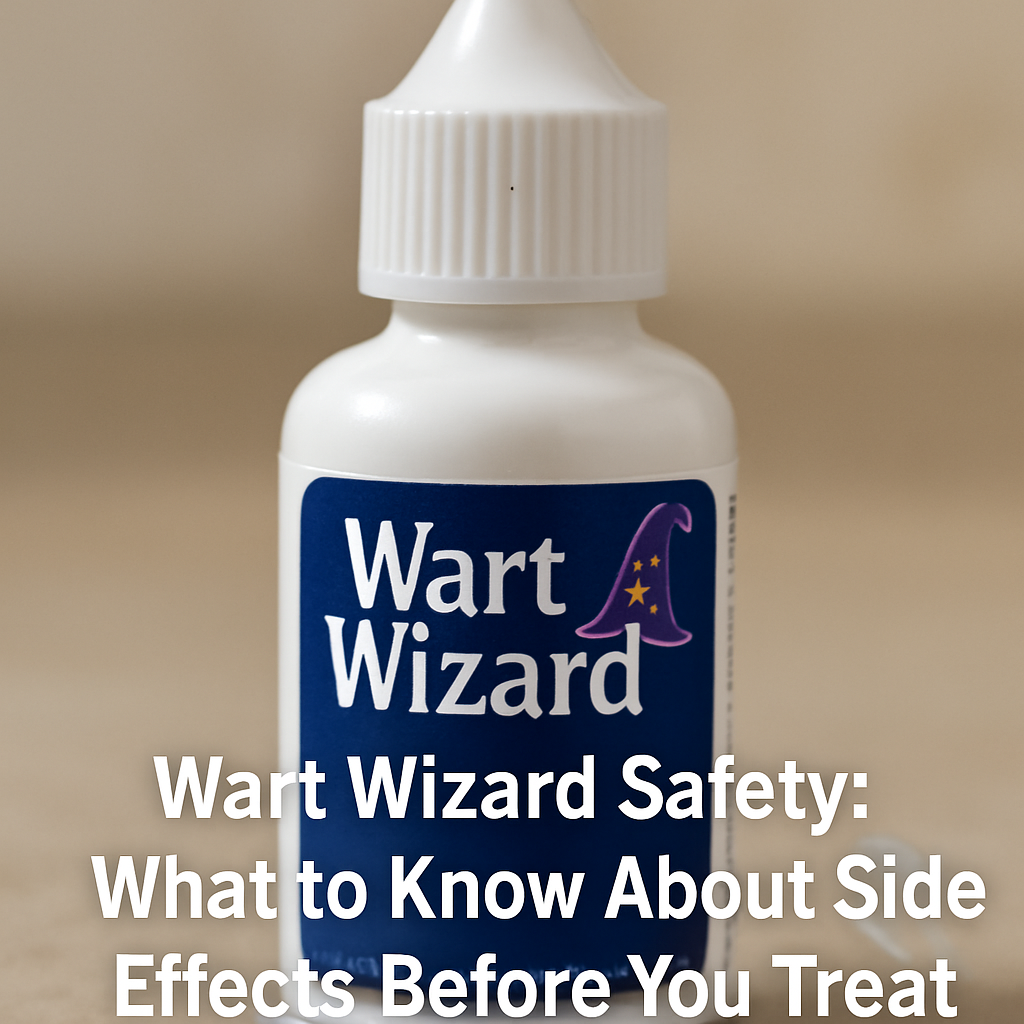
At-home wart removers have surged in popularity, and products like Wart Wizard are now a go-to option for people who want fast, private treatment without a clinic visit. But as more people reach for over-the-counter wart treatments, questions about safety, skin damage, and long-term effects are becoming more common.
This guide walks through Wart Wizard wart removal side effects in clear, practical terms: what’s normal, what’s a red flag, and how to lower your risk of problems while getting the best possible results.
How Wart Wizard Works on the Skin
Most consumer wart treatments, including Wart Wizard–style products, work by destroying the infected skin so the body can replace it with healthy tissue. They typically use one of two approaches:
- Chemical destruction – Often with keratolytic agents such as salicylic acid that dissolve the thick, virus-infected layers of skin.
- Freezing (cryotherapy-style) – Using a very cold liquid or gas to freeze the wart and trigger blistering and shedding of the tissue.
Because these methods are intentionally harsh on the wart, they can also irritate or damage the surrounding healthy skin. That’s where most Wart Wizard wart removal side effects come from: the treatment doing its job, but sometimes extending beyond the target area.
Common Wart Wizard Side Effects (Usually Mild and Temporary)
A certain amount of discomfort or visible skin change around the wart is expected. These are the side effects people most often report when using Wart Wizard or similar wart removers correctly:
1. Stinging, Burning, or Mild Pain
What it feels like: A short-lived sting or burn when the product is applied, followed by soreness or tenderness for a few hours or days.
- Why it happens: The active ingredient is breaking down wart tissue or freezing the area, which naturally irritates nerve endings.
- When it’s acceptable: Mild to moderate discomfort that improves with each day and doesn’t stop you from using the area (like walking on a treated foot).
- When to stop: Intense, throbbing pain, spreading pain beyond the treated area, or pain that keeps worsening after 24–48 hours.
2. Redness and Skin Irritation Around the Wart
What it looks like: Pink or red skin around the treated wart, sometimes slightly swollen or sensitive to touch.
- Why it happens: The treatment can’t perfectly distinguish between infected and healthy skin, so the surrounding area may react.
- Typical course: Mild redness that peaks in the first couple of days and then gradually fades as the skin heals.
- What helps: Applying the product only to the wart surface, protecting nearby skin with petroleum jelly or a small ring of tape, and following the exact application time and frequency on the label.
3. Peeling, Flaking, or Softening of Skin
What it looks like: The wart and nearby skin may turn white, soften, then peel or flake off in layers.
- Why it happens: Keratolytic ingredients break down the outer layer of skin, which then sheds.
- Is it normal? Yes—controlled peeling is how many wart removers work. It should stay limited to the treated area.
- What to avoid: Do not pull or pick at peeling skin aggressively; trim loose pieces gently with clean scissors if needed.
4. Blistering at the Treatment Site
What it looks like: A small fluid-filled blister or a blood blister under or around the wart, especially after freeze-type treatments.
- Why it happens: Freezing or strong irritation injures the skin and triggers a blister as part of the healing response.
- When it’s expected: Small, localized blisters that are uncomfortable but manageable and gradually dry up and form a scab.
- Care tips: Keep the blister clean and covered; avoid popping it. If it opens, gently clean with mild soap and water and apply a clean bandage.
Less Common but More Serious Side Effects
While most Wart Wizard wart removal side effects are mild, some reactions signal that the product is too strong for your skin or has been used incorrectly. Take these more seriously and stop using the product if they appear.
5. Severe Skin Irritation or Chemical Burns
What it looks like: Intense redness, raw or weeping skin, dark scabbing beyond the wart, or a burning sensation that doesn’t ease after rinsing.
- Typical causes: Using the product more often than directed, applying too much, treating an area that’s already irritated, or getting the product on thin or sensitive skin.
- Risk factors: Treating warts on the face, genitals, or thin-skinned areas, or using on children without guidance.
- What to do: Rinse the area thoroughly with cool water, stop treatment, and contact a healthcare provider if the skin looks badly damaged, extremely painful, or shows signs of infection.
6. Infection at the Treatment Site
What it looks like: Increasing redness spreading from the wart, warmth, pus, yellow crusting, or fever and feeling unwell.
- Why it happens: Broken or blistered skin can let bacteria in, especially on feet (plantar warts) or hands used frequently.
- Warning signs: Rapidly spreading redness, bad odor, or pain that intensifies rather than improves.
- Action steps: Stop using Wart Wizard, keep the area clean and dry, and seek medical care promptly—especially if you have diabetes, poor circulation, or a weakened immune system.
7. Scarring or Changes in Skin Color
What it looks like: A permanent or long-lasting pale (lighter) or dark (darker) patch where the wart was, or a small depressed or raised scar.
- How it happens: Deeper skin damage from aggressive or repeated treatment can alter pigment cells or the skin’s structure.
- Higher-risk areas: Face, neck, chest, and darker skin tones (which are more prone to pigment changes).
- Prevention: Use the minimum effective amount of treatment, avoid over-treating once the wart is gone, and never use Wart Wizard on areas the label specifically warns against.
Who Should Be Extra Cautious Using Wart Wizard
Even if a product is available over the counter, it isn’t automatically safe for every person or every type of wart. Use extra caution—or avoid self-treatment entirely—if any of the following apply to you:
- Diabetes or poor circulation – Especially for warts on the feet or lower legs, where small injuries can become serious.
- Compromised immune system – From medications, medical conditions, or recent illness. You may react differently and heal more slowly.
- Pregnancy or breastfeeding – Many topical wart treatments are considered low risk, but you should check with your clinician before use.
- Very young children – Children’s skin is thinner and more sensitive; pediatric guidance is recommended.
- Warts on sensitive areas – Face, lips, eyelids, genitals, or large areas of skin. Most at-home products explicitly say not to use them there.
- Uncertain diagnosis – If you’re not completely sure the growth is a wart, have a clinician look at it before you treat.
If you fall into any of these categories, talk to a healthcare professional before using Wart Wizard or any similar product. In some cases, safer or more targeted in-clinic options may be recommended.
How to Use Wart Wizard More Safely
Most Wart Wizard wart removal side effects can be minimized with careful application and realistic expectations. These practices help keep treatment on track:
Follow the Instructions Exactly
- Do not exceed the recommended frequency – More frequent use does not equal faster results; it often just increases irritation and risk of burns.
- Use the smallest effective amount – Apply just enough to cover the wart surface, not the surrounding skin.
- Respect time limits – If the product says to leave it on for a specific period, do not leave it longer.
Protect the Surrounding Skin
- Apply a thin layer of petroleum jelly around—but not on—the wart to act as a barrier.
- Use a small applicator (like a cotton swab or the supplied tip) for precise placement.
- Consider masking off the area around the wart with a small donut-shaped piece of tape or bandage to keep the product contained.
Monitor Your Skin’s Response
- Track changes – Take photos every few days to see whether the wart is shrinking or if irritation is spreading.
- Know when to pause – If redness or soreness is building up, skip an application or two to let the skin recover.
- Stop at clear warning signs – Severe pain, large blisters, or rapidly spreading redness are reasons to stop immediately.
When Wart Wizard Side Effects Mean It’s Time for a Doctor
Self-treatment is convenient, but it shouldn’t replace professional care when things don’t go as expected. Seek medical advice if:
- The wart doesn’t improve at all after following Wart Wizard directions for the full recommended period.
- New warts keep appearing nearby or in other areas.
- You notice severe or worsening side effects such as deep skin damage, significant bleeding, or suspected infection.
- The growth changes rapidly in shape, color, or texture, or starts bleeding easily without obvious cause.
- You’re unsure whether the lesion is truly a wart (for example, it has irregular borders or multiple colors).
A dermatologist or primary care provider can confirm the diagnosis, suggest safer alternatives, and treat complications like infection or scarring if they occur.
Balancing Convenience and Caution
Wart Wizard and similar at-home treatments offer a practical way to deal with common warts without waiting for a specialist appointment. Used carefully, most people experience only mild, manageable side effects such as temporary redness, tenderness, and peeling.
The key is to respect that these are real medical-strength treatments, not just cosmetic products. Read the label closely, protect healthy skin, watch for warning signs, and be willing to stop and get help if your skin reaction feels more severe than expected. With that balance of convenience and caution, you can improve your chances of clearing warts while keeping Wart Wizard wart removal side effects to a minimum.
If you’re comparing different options or want to learn more about wart care in general, exploring resources in the Wart Wizard category can help you make a more informed, skin-safe decision.
Thanks for reading our blog.