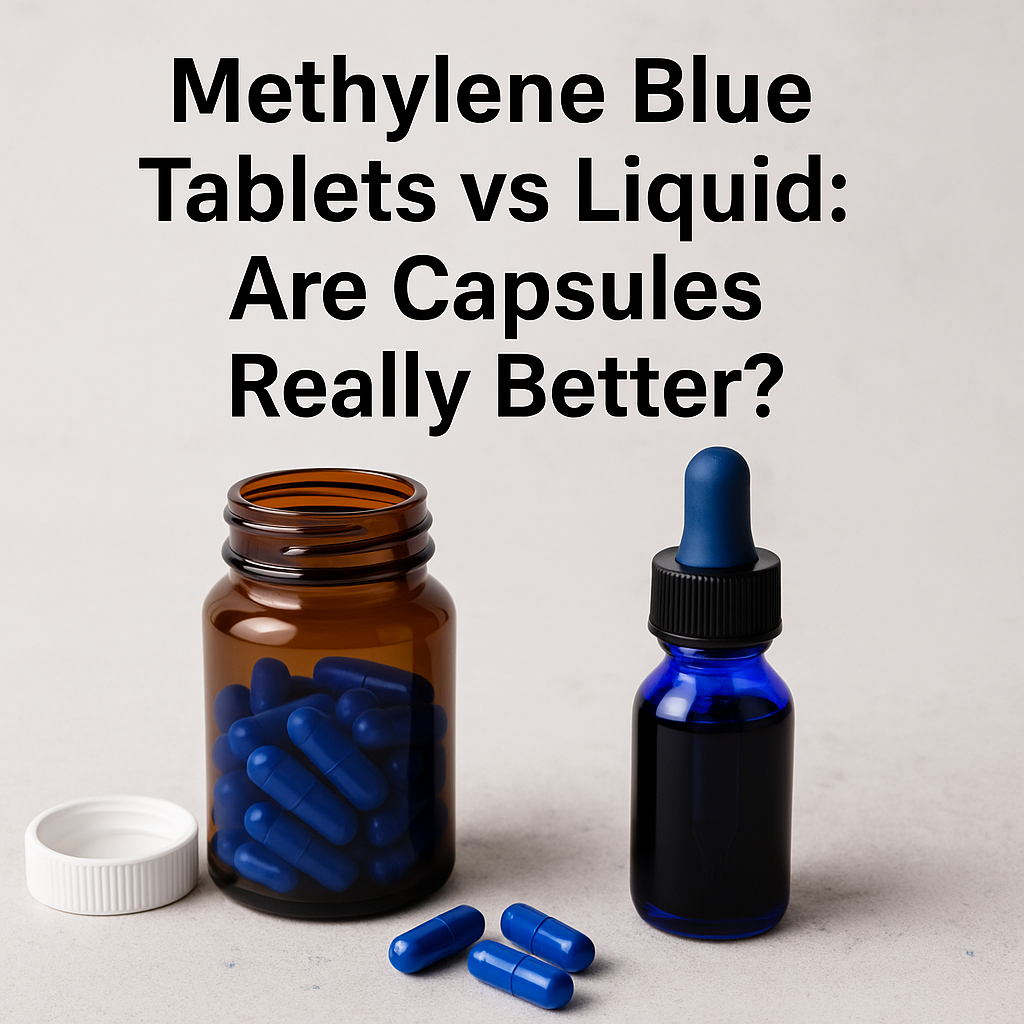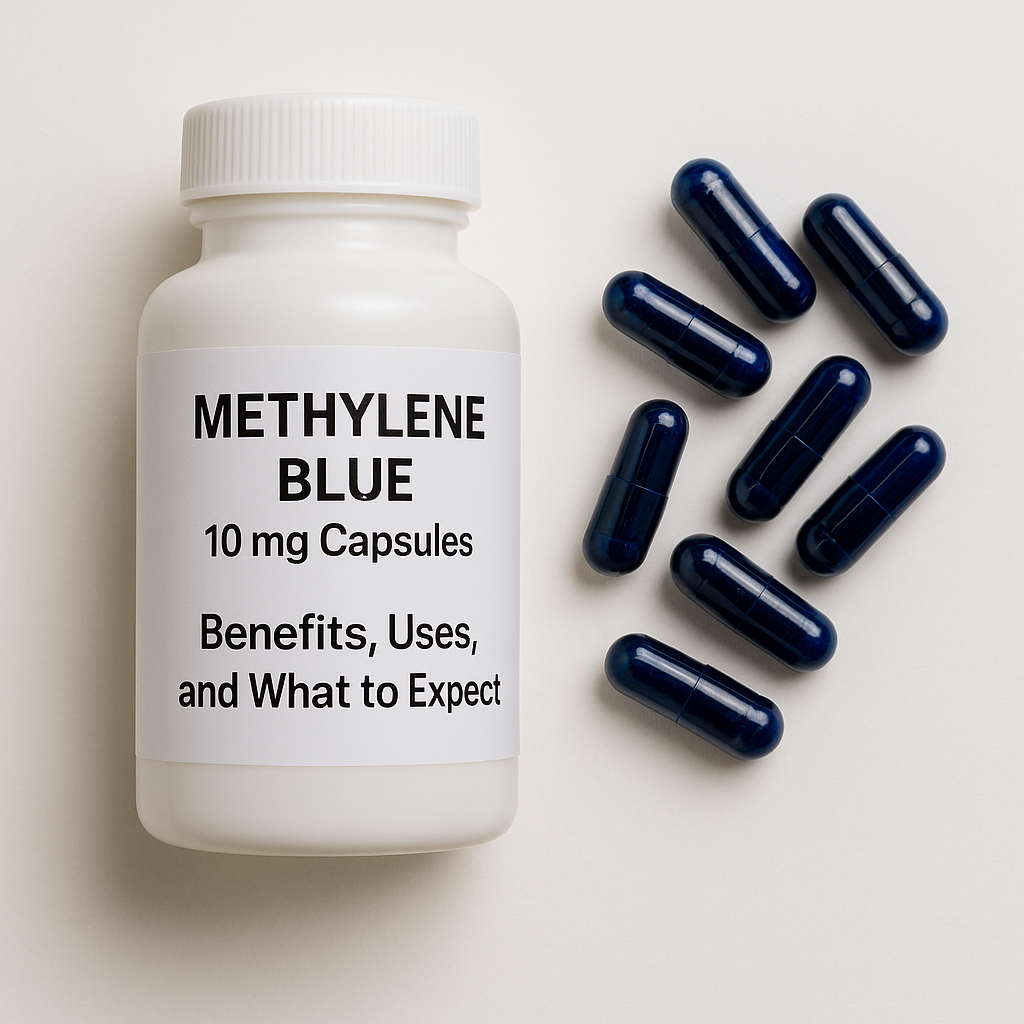
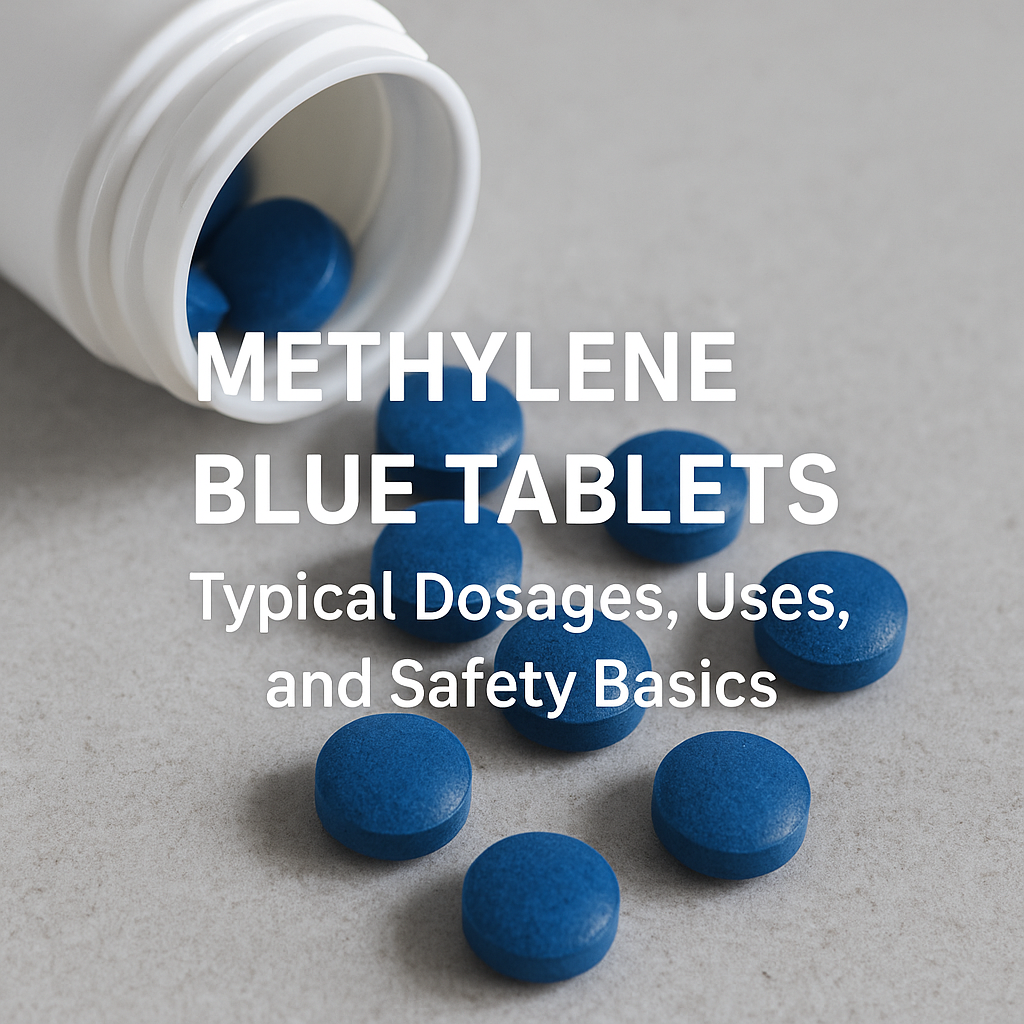
How much methylene blue in tablet form is typically used, and what should you know about safety before taking it? Understanding methylene blue dosage is essential, because this compound has both established medical uses and emerging, more experimental applications.
What are methylene blue tablets?
Methylene blue is a synthetic dye that has been used in medicine for more than a century. In clinical settings, it is most commonly used as an injectable drug, but it can also be formulated as oral tablets or capsules. These tablets may be used for:
- Approved medical indications such as certain forms of methemoglobinemia (a blood disorder where hemoglobin cannot carry oxygen effectively) and as part of some diagnostic or surgical procedures.
- Off-label or experimental uses that are still being studied, including cognitive or mitochondrial support, which may be discussed in wellness or longevity communities.
This article focuses on informational aspects of methylene blue dosage in tablet form, not on recommending its use for any specific condition.
Medical vs. non-medical use: why dosage context matters
The appropriate methylene blue dosage depends heavily on why it is being used and under whose supervision. In general:
- Hospital and emergency uses (for example, for methemoglobinemia) often involve higher, carefully calculated doses, usually given by injection and based on body weight.
- Outpatient or oral tablet use may involve lower doses, and is typically overseen by a specialist familiar with the drug’s benefits and risks.
- Self-directed use without medical guidance carries meaningful risks, especially when people copy doses from online sources that may not match their health status or other medications.
Because methylene blue can interact with other drugs and conditions, dosage should never be adjusted solely on the basis of internet information.
Typical informational dosage ranges for methylene blue tablets
Exact prescribing decisions must be made by a licensed professional, but it can be helpful to understand the broad patterns of how methylene blue is commonly discussed in tablet form:
- Body-weight–based dosing is often used in medical contexts. For example, protocols may calculate milligrams per kilogram of body weight for acute conditions, with strict upper limits and monitoring.
- Fixed-dose tablets (e.g., specific milligrams per tablet) may be taken as single or divided doses across the day, depending on the indication and formulation.
- Short-term vs. long-term use: higher doses are more common for short, medically supervised courses; lower doses (if used) may be considered for longer periods, but this must be evaluated case by case.
Because products vary in strength and purity, it is critical to read the product label and follow the exact instructions provided by your clinician and the manufacturer. Do not assume that all methylene blue tablets are interchangeable.
Factors that influence methylene blue dosage
Safe and appropriate dosing of methylene blue tablets depends on multiple individual factors. Common considerations include:
- Indication: The reason for use (e.g., an acute blood disorder versus an experimental cognitive application) changes the risk–benefit balance and typical dose range.
- Body weight and age: Children, older adults, and people with low body weight often require different dosing than healthy younger adults.
- Kidney and liver function: These organs help process and clear methylene blue. Impaired function can increase exposure and side effect risk.
- Other medications: Certain antidepressants, migraine medications, and other drugs that affect serotonin or monoamine oxidase can significantly interact with methylene blue.
- Genetic or metabolic conditions: Some inherited enzyme deficiencies can make methylene blue unsafe or less effective.
Because of these variables, two people taking the same tablet strength may not be on a comparable or equally safe dosage.
How methylene blue tablets are usually taken
Administration details may influence both effectiveness and side-effect risk. General informational points include:
- Route: Tablets are swallowed with water; some formulations may be dispersible or sublingual, depending on the product design.
- With or without food: Some people tolerate methylene blue better with food, although specific instructions depend on the product and clinical plan.
- Divided doses: For certain uses, total daily dosage may be divided into two or more smaller doses to maintain steadier levels and reduce gastrointestinal discomfort.
- Duration: Treatment might be a single dose, a short course, or a longer regimen, depending on the medical indication and professional guidance.
Always follow the exact administration instructions provided by your healthcare professional and the product label.
Recognizing common side effects and dose-related issues
Methylene blue tablets can cause side effects, and the likelihood and intensity often increase with higher doses. Possible effects may include:
- Changes in urine or stool color (often blue or greenish), which can be alarming but are usually expected and not harmful on their own.
- Digestive symptoms such as nausea, abdominal discomfort, or diarrhea.
- Headache or dizziness, especially at higher doses or in sensitive individuals.
- Skin or mucous membrane discoloration, including temporary blue staining.
More serious reactions are uncommon but can be dangerous. These may include breathing difficulties, significant confusion, chest pain, high blood pressure, or signs of a severe allergic or neurologic response. Any new or severe symptom should prompt urgent medical evaluation.
Serious risks: serotonin syndrome and other interactions
One of the most important safety concerns with methylene blue dosage is its interaction with medications that affect serotonin, such as certain antidepressants and migraine drugs. At higher doses, methylene blue can act as a monoamine oxidase inhibitor (MAOI), which can lead to serotonin syndrome when combined with other serotonergic agents. This potentially life-threatening condition may involve:
- Agitation, confusion, or restlessness
- Rapid heart rate and high blood pressure
- Muscle rigidity, tremor, or loss of coordination
- Fever, sweating, or shivering
Because the risk is dose-related and depends on drug combinations, it is essential to tell your healthcare professional about all medications and supplements you use before starting methylene blue tablets.
Who should avoid or be extremely cautious with methylene blue?
Certain groups may face higher risks from methylene blue, especially at typical or higher dosages. Caution or complete avoidance is often advised for people who:
- Take serotonergic medications such as SSRIs, SNRIs, MAOIs, certain pain or migraine medications, or other drugs that affect serotonin levels.
- Have known G6PD deficiency or other red blood cell enzyme disorders, which can change how red blood cells respond to oxidative stress.
- Are pregnant or breastfeeding, where risk–benefit considerations may be different and data may be limited.
- Have significant kidney or liver disease, which can alter drug clearance.
- Are very young, elderly, or medically complex, where narrow therapeutic windows and multiple medications increase risk.
If you fall into any of these categories, do not start methylene blue tablets without individualized medical advice.
Product quality, purity, and strength: why your source matters
Methylene blue is produced for different markets, including industrial, laboratory, and pharmaceutical uses. Only pharmaceutical-grade methylene blue is appropriate for human use. Key points to consider:
- Grade: Industrial or technical-grade methylene blue may contain impurities that are not acceptable for ingestion.
- Strength and labeling: Carefully check how many milligrams of methylene blue are in each tablet and whether there are any other active ingredients.
- Reputable manufacturer: Choose products with clear manufacturing information and, where applicable, professional guidance or prescription.
Because different brands may use different strengths per tablet, the same number of tablets can represent very different total doses.
Practical safety tips if you’re discussing methylene blue tablets with a clinician
If you are considering methylene blue or have been prescribed it, you can make the conversation with your healthcare professional more productive by asking targeted questions. Examples include:
- “What is my total daily methylene blue dosage in milligrams, and how was it chosen?”
- “How long should I stay on this dose, and what signs would make you change it?”
- “Which of my current medications or supplements could interact with methylene blue?”
- “What side effects should I watch for at this dose, and when should I seek urgent care?”
- “Is there a plan for monitoring labs or vital signs while I’m taking methylene blue tablets?”
Bringing an up-to-date list of your medications, supplements, and medical conditions helps your clinician tailor the dosage to your situation.
Missed doses, stopping, and changing methylene blue dosage
Because dosing strategies differ widely, you should follow the specific plan given by your prescriber. In general informational terms:
- Missed doses: Do not double up on methylene blue tablets unless your clinician explicitly instructs you to do so. Taking extra tablets can increase side-effect risk.
- Stopping suddenly: For short courses at standard doses, stopping is not usually problematic, but this can depend on why the drug was used and whether it was combined with other medications.
- Self-adjustment: Increasing the number of tablets because you “don’t feel a benefit” can be dangerous. Lack of benefit should prompt a conversation with your clinician, not self-escalation.
Any change in methylene blue dosage should be guided by a qualified professional who understands your full medical picture.
When to seek urgent medical help
If you are taking methylene blue tablets and experience any of the following, seek emergency care or contact your local emergency services:
- Severe shortness of breath or difficulty breathing
- Chest pain, rapid or irregular heartbeat
- Confusion, high fever, muscle rigidity, or pronounced agitation (possible signs of serotonin syndrome or another serious reaction)
- Severe allergic symptoms such as swelling of the face or throat, hives, or difficulty swallowing
For milder but concerning symptoms (ongoing nausea, headaches, unusual mood or neurologic changes, or persistent discoloration beyond what was expected), contact your prescribing clinician promptly.
Key takeaways on methylene blue tablets and dosage
Methylene blue is a potent compound with valuable medical applications, but methylene blue dosage must be handled carefully, especially in tablet form. Dosage decisions depend on the indication, individual health factors, and potential interactions with other medications. Self-prescribing or adjusting doses based on online advice alone can be risky.
This article is for general information only and does not replace professional medical evaluation, diagnosis, or treatment. Always consult a qualified healthcare professional before starting, stopping, or changing any methylene blue regimen.
Thanks for reading our blog.